


Electric Vehicle Guide for First-Time Buyers: What to Know Before You Go Electric
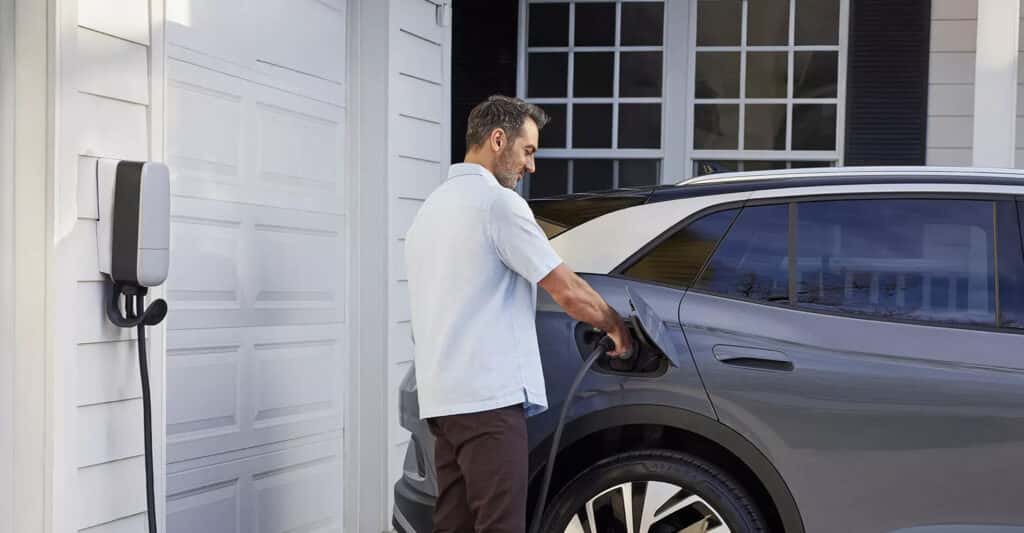
Electric vehicles (EVs) are becoming a common sight in driveways across the Midwest, and for good reason. With fuel savings, lower maintenance, and high-tech features, they’re changing the way we drive. But for first-time EV buyers, it’s normal to have questions about range, charging, and cost, especially with so many new models hitting the market.
This electric vehicle guide is here to walk you through everything you need to know about buying your first EV. From how charging works to what kind of incentives you can claim, we’ll help you feel confident about making the switch.
Find out what electric car ownership looks like, and how to choose a model that fits your lifestyle and budget.
What You Should Know Before Buying Your First EV
Electric vehicles have come a long way from their early days of limited range and niche appeal. Today’s EVs are practical, high-performing, and well-suited to the everyday needs of commuters, families, and first-time buyers alike. With growing model options and improvements in battery technology, making the switch to electric has never been more accessible.
If you’re thinking about taking the leap, here are a few key factors to consider:
Driving Habits
Most modern EVs offer over 250 miles of range on a full charge—more than enough for the average U.S. driver, who typically travels less than 40 miles per day. Whether it’s commuting, school drop-offs, or weekend errands, EVs easily meet daily driving demands.
Charging Access
The ability to plug in at home overnight or during the workday is one of the biggest advantages of owning an EV. It minimizes the need for public charging and makes powering up feel just like charging a phone.
Cost Considerations
While EVs can carry a higher sticker price, long-term ownership is often more affordable thanks to reduced fuel costs, fewer maintenance needs, and available tax incentives. Think of it as a smarter investment over time.
Incentive Eligibility
From federal tax credits to local utility perks and state rebates, incentive programs are designed to help offset the cost of buying electric. Many first-time buyers find that these savings make EV ownership well within reach.
Charging Basics
Understanding charging is one of the first steps toward EV ownership, and thankfully, it’s simpler than it seems. Whether you’re fueling up at home or topping off on the go, today’s EV charging infrastructure offers flexibility to fit your lifestyle.
At-Home Charging
Most EV owners do the majority of their charging at home. Here’s what to expect:
- Level 1 (120V standard outlet): This is the slowest method, adding about 3–5 miles of range per hour. It’s surprisingly useful for drivers with short daily commutes, especially if you average under 40 miles per day. Just plug in overnight and you’re set for the next day.
- Level 2 (240V outlet): This setup adds roughly 15–30 miles per hour, depending on your vehicle and electrical configuration. It’s the most common solution for EV households and allows for a full charge in about 8 hours or less. Many EV owners choose to install a Level 2 charger in their garage or driveway for faster, more reliable charging.
Home charging gives you the luxury of starting each morning with a full “tank,” eliminating the need for weekly gas station runs and saving time over the long haul. It’s one of the most compelling advantages of EV ownership.
Missouri utilities like Ameren may also offer rebates to help you cover the installation costs for a Level 2 charger, making this upgrade more accessible than ever.
Public Charging
Longer trips or apartment living may require more public charging, which is easier to access than ever, thanks to an expanding national network:
- Level 2 Chargers: These are commonly found in parking garages, shopping centers, office parks, and hotel lots. Perfect for topping up your charge while going about your daily errands or during a workday.
- DC Fast Charging: The fastest way to charge, DC fast chargers can bring most EVs from 10% to 80% charge in 30–45 minutes. They’re ideal for road trips and available at many major highway rest stops and travel hubs.
Modern apps make it easy to find and navigate to nearby charging stations. You can even filter by charging speed, price, and availability, whether you’re cruising through midtown St. Louis or planning a weekend getaway.
Maintenance and Long-Term Savings
One of the biggest advantages of EV ownership—especially for first-time buyers—is the potential to save significantly on maintenance and fuel over the life of the vehicle. Compared to traditional gas-powered cars, EVs are simpler to service, easier to maintain, and cheaper to run.
Less Maintenance, More Peace of Mind
Electric vehicles have far fewer mechanical components than internal combustion engines. That means fewer parts that can wear out or fail, and fewer visits to the shop. Most EVs don’t require:
- Oil changes
- Transmission service or flushes
- Timing belts or spark plug replacements
- Emission system repairs (there’s no tailpipe!)
On top of that, EVs use regenerative braking, a system that captures energy during deceleration and feeds it back into the battery. This not only boosts efficiency but also reduces wear on your brake pads, meaning they last longer and require fewer replacements. Over time, that adds up to real savings and fewer service appointments.
Battery Health and Warranty Coverage
If you’re worried about battery longevity, you’re not alone. The good news is that EV batteries are built to last. Modern lithium-ion batteries are incredibly resilient and designed to withstand daily charging and driving for many years.
- Most automakers offer 8–10 year battery warranties that cover manufacturing defects and excessive degradation (typically if battery capacity falls below a certain percentage).
- Under normal conditions, batteries are expected to retain strong performance well beyond 100,000 miles, with many lasting far longer with proper care.
- Battery management systems monitor charge levels and temperatures to maximize longevity automatically, so drivers don’t need to think about it every day.
In short, EV batteries are engineered for the long haul, and generous warranty protection gives first-time buyers confidence in their investment.
Find available EVs, compare models, and get expert help choosing your perfect electric ride.
Fuel Savings Add Up Fast
Electricity is much cheaper than gasoline on a per-mile basis—especially if you charge during off-peak hours or take advantage of time-of-use (TOU) utility plans. Many EV owners who charge at home overnight report significant annual savings:
- On average, households save $500 to $1,000+ per year in fuel costs, depending on local rates, driving habits, and gas prices.
- Utility companies like Ameren Missouri and Ameren Illinois may offer EV charging rate plans or rebates that lower the cost of home charging even further.
These savings stack up over the years. When you combine them with lower maintenance costs and potential purchase incentives, the total cost of ownership for an EV can often beat that of a gas-powered vehicle despite a higher initial sticker price.
EV Incentives
One of the biggest surprises for many first-time EV buyers is just how much financial assistance is available. Between federal tax credits, state-level programs, and utility company incentives, it’s possible to knock thousands of dollars off the cost of your new (or used) electric vehicle. Knowing what you qualify for—and how to apply—can make EV ownership far more affordable than it appears at first glance.
Federal Tax Credits
At the national level, the federal EV tax credit offers a powerful boost:
- New EVs may qualify for up to a $7,500 tax credit, provided both the vehicle and the buyer meet specific requirements. These include final assembly location (which must be in North America), battery component sourcing, and household income thresholds.
- Used EVs can be eligible for a $4,000 federal credit, available to qualifying buyers who purchase from a licensed dealer. This credit is often overlooked but can be especially helpful for budget-conscious first-time buyers looking to enter the EV market with lower up-front costs.
The federal credit is not a rebate. It’s a tax credit, meaning it reduces your tax liability for the year in which you purchase the vehicle. But it can still make a meaningful difference when planning your purchase.
Missouri Incentives
Missouri does not currently offer a state-level EV purchase rebate, but residents can still save in other ways:
- Utility programs, such as those offered by Ameren Missouri, provide rebates for Level 2 home charger installations, helping reduce the cost of setting up convenient at-home charging.
- Many utilities also offer time-of-use (TOU) electricity plans designed specifically for EV drivers. These plans reward customers for charging their vehicles during off-peak hours—often overnight—when demand is low and electricity is cheaper.
- Some municipalities may offer additional incentives or reduced registration fees for electric vehicles, so it’s worth checking with your local DMV or utility provider.
While Missouri relies heavily on federal programs, these utility-based rebates and charging incentives can still help make EV ownership more cost-effective and convenient.
Illinois Incentives
If you live in Illinois, you may benefit from one of the most generous state EV rebate programs in the region:
- Up to a $4,000 rebate is available for new or used EVs, as long as they are purchased from a licensed Illinois dealer.
- Electric motorcycles also qualify for a $1,500 rebate, broadening the incentive’s reach.
- Buyers must apply within 90 days of purchase, and the application process includes documentation of the sale and proof of residence.
It’s important to note that the rebate program is subject to funding availability. The Illinois Environmental Protection Agency opens and closes the program in phases, depending on budget cycles, so timing your purchase carefully is key.
In some cases, combining federal and state incentives in Illinois can reduce the overall cost of an EV by well over $10,000, depending on model eligibility and buyer qualifications.
Maximize Savings Through Dealer Promotions
In addition to government programs, dealerships—like Suntrup Volkswagen in St. Louis—often offer limited-time incentives, promotional pricing, or financing specials on new EVs. These may include loyalty bonuses, special APR offers, or dealership-specific rebates that stack with federal and state programs.
What Models Should First-Time Buyers Consider?
As EV options grow, many automakers are launching electric models designed for first-time buyers. Volkswagen stands out for offering practical, family-ready electric vehicles.
The Volkswagen ID.4, for example, combines sleek crossover styling with:
- Estimated range of around 291 miles
- Available AWD for all-weather performance
- Standard driver assistance features, including Travel Assist
- Spacious interior and 64.2 cu ft of max cargo volume
Other brands also offer budget-friendly EVs and compact crossovers, but the ID.4 is especially well-rounded for drivers looking to blend comfort, familiarity, and innovation.
At Suntrup Volkswagen, shoppers can explore electric models in person, ask questions, and take a test drive to see if an EV is right for them.
See how Volkswagen’s all-electric SUV blends everyday comfort with cutting-edge tech.
Make the Switch to Electric at Suntrup Volkswagen
Going electric is more than a trend. It’s a smart move for today’s drivers, offering real savings, low maintenance, and advanced features that make every trip easier. With flexible charging options, long-range capabilities, and meaningful incentives, the transition to EV ownership has never been more accessible. At Suntrup Volkswagen in St. Louis, we’re here to help you navigate your first electric vehicle purchase with expert guidance, local support, and a lineup of versatile EVs like the Volkswagen ID.4 that are designed for everyday comfort and practicality. Visit us today to experience the future of driving, backed by a team you can trust.
More from Suntrup Volkswagen
Best Volkswagen SUV for Families: A South County Buyer’s Guide
Volkswagen’s SUV lineup covers more ground than most buyers expect, from the nimble Taos at the entry point to the full-size Atlas at the top, with the Tiguan and Atlas Cross Sport filling the middle. For families shopping in South County and across the St. Louis metro, that range is genuinely useful: it means there…
2026 Volkswagen Atlas vs. 2026 Chevy Traverse: Which Three-Row SUV Wins for St. Louis Families?
When you are shopping for a three-row family SUV, the 2026 Volkswagen Atlas and 2026 Chevrolet Traverse land in the same conversation for good reason. Both carry seven passengers, both tow up to 5,000 pounds when properly equipped, and both start right around $40,000. Look closer, though, and the differences start to matter. The 2026…
Why Buy Your Next Volkswagen From Suntrup Volkswagen in St. Louis
Choosing the right Volkswagen is one decision. Choosing the right dealer is another. For South County and South St. Louis drivers, Suntrup Volkswagen on S. Lindbergh Blvd. has built a consistent answer to that second question, backed by award-winning recognition from Volkswagen itself, a complete lineup of current models, and a service department built to…
0 comment(s) so far on Electric Vehicle Guide for First-Time Buyers: What to Know Before You Go Electric