


2026 Volkswagen Tiguan vs. Kia Sportage: Which Compact SUV Reigns Supreme in St. Louis?
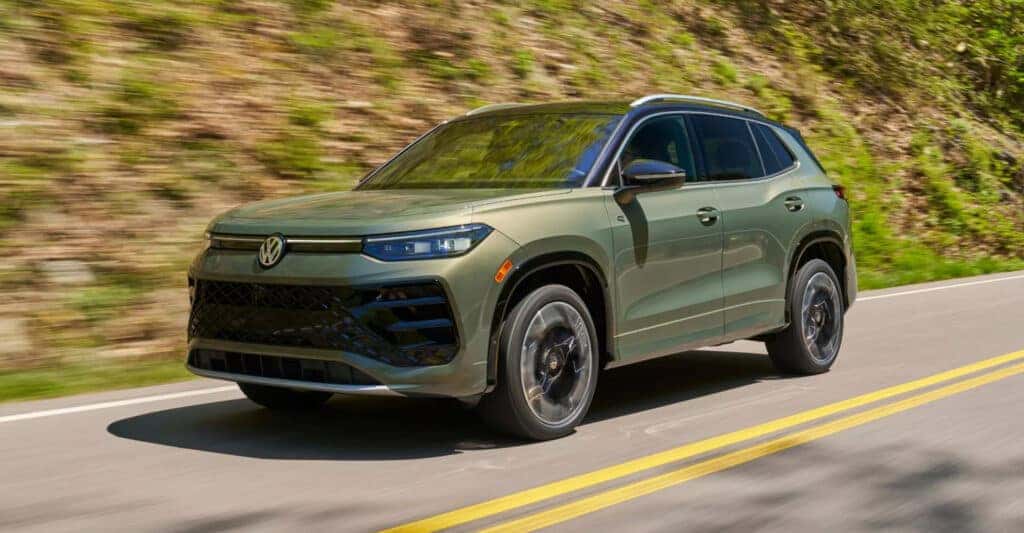
The compact SUV segment is one of the most competitive in the industry, and for good reason—these vehicles do everything. They commute, haul groceries, handle road trips, and survive St. Louis winters. The 2026 Volkswagen Tiguan and 2026 Kia Sportage are two of the most popular options on the market right now, and on paper they look like close competition. But once you dig past the spec sheets, the differences are meaningful. Here’s a side-by-side breakdown to help you choose.
A Quick Note on the Tiguan’s Redesign
Before diving into the comparison, it’s worth establishing where the Tiguan stands in its lifecycle. The Tiguan was fully redesigned for 2025, moving onto Volkswagen’s new MQB Evo platform.
That means a longer wheelbase, a more spacious two-row interior, an updated turbocharged engine, and a substantially upgraded tech package. The 2026 model carries that redesign forward and adds a new top trim with 268 horsepower and near-luxury amenities. If you cross-shopped the previous-generation Tiguan against the Sportage and walked away unimpressed, the new one is a different vehicle.
Performance: Tiguan Takes the Advantage
The power gap between these two SUVs is one of the clearest differentiators in the comparison. The 2026 Tiguan S, SE, and SE R-Line Black all run a turbocharged 2.0-liter four-cylinder producing 201 horsepower and up to 221 lb-ft of torque with AWD. The SEL R-Line Turbo steps that up to 268 horsepower and 258 lb-ft. The 2026 Kia Sportage, across all of its standard gas trims, produces 187 horsepower from a naturally aspirated 2.5-liter four-cylinder.
That 14-horsepower base difference might not sound dramatic, but it shows up in real-world driving. Edmunds’ testing noted that the Sportage’s engine is a genuine liability — passing on the highway requires planning, and adding passengers and cargo makes the situation noticeably worse. On I-270 or I-44 during rush hour, where confident merging and lane changes matter, the Tiguan’s turbocharged torque delivery makes it a more composed and confidence-inspiring drive.
Fuel economy is also closer than the Sportage’s larger displacement suggests. The Tiguan is EPA-rated at up to 26 city / 34 highway on FWD trims. The Sportage’s best gas trims come in around 26 city / 33 highway—nearly identical, which means the Tiguan delivers more power without a meaningful trade-off at the pump.
Interior Quality: Tiguan Feels a Class Above
This is where the Tiguan pulls ahead most clearly for buyers who care about the in-cabin experience. The 2026 Tiguan comes standard with a 12.9-inch touchscreen, a 10.25-inch Digital Cockpit Pro digital instrument cluster, wireless Apple CarPlay and Android Auto, wireless charging, and up to 30-color ambient lighting. The SEL R-Line Turbo upgrades to a 15-inch display, real walnut wood trim, quilted leather seating, massaging front seats, and a 12-speaker Harman Kardon audio system.
The Sportage received a nice tech refresh for 2026, with a 12.3-inch touchscreen and matching 12.3-inch digital instrument display now standard across the lineup. It’s a genuinely attractive interior. But the material quality and overall refinement of the Tiguan’s cabin—particularly on SE trims and above—reflects the kind of premium feel that typically costs considerably more from a luxury brand.
One practical note: the Tiguan offers approximately 33–34 cubic feet of cargo space behind the rear seats, expanding to roughly 69.8 cubic feet with the second row folded. The Sportage checks in at 39.6 cubic feet behind the second row—a win for Kia on raw cargo volume, and worth noting if cargo capacity is a top priority.
Compare the 2026 Tiguan in Person: Schedule a Test Drive at Suntrup Volkswagen
Safety: Both Are Strong, Tiguan Offers More Standard Coverage
Both vehicles take safety seriously, and both earn strong marks from third-party testing organizations. The 2026 Kia Sportage earned IIHS TOP SAFETY PICK+ recognition on vehicles built after May 2025, which is a meaningful credential. The Tiguan is equipped with Volkswagen’s full IQ.DRIVE suite standard on every trim—including forward collision warning with automatic emergency braking, active blind spot monitoring with rear traffic alert, lane assist, adaptive cruise control with stop-and-go, and emergency assist.
The Sportage’s 2026 update brought adaptive cruise control and front and rear parking sensors to standard equipment across the lineup, closing a gap that existed in prior years. At the base trim level, both vehicles now offer a solid safety foundation. The Tiguan’s edge is in driver-assist sophistication and the depth of its standard coverage—features like Travel Assist (which combines adaptive cruise and lane centering) come standard on the Tiguan rather than as upgrade-tier additions.
Pricing: Sportage Starts Lower, Tiguan Delivers More for the Money
The 2026 Kia Sportage starts at $28,790 MSRP, making it one of the more affordable entries in the compact SUV segment. The 2026 Tiguan starts at $32,280, a roughly $3,500 premium at the base level.
That gap narrows when you compare similarly equipped trims. The Tiguan’s standard features list — larger screens, more powerful engine, richer interior materials, and a more complete safety suite — means you’re getting meaningfully more content per dollar as you move into mid-range trims. Buyers who would need to option up a Sportage to match the Tiguan’s standard feature set often find the price difference largely disappears.
The Kia also carries a significant long-term ownership advantage: its 10-year/100,000-mile powertrain warranty compared to Volkswagen’s 4-year/50,000-mile bumper-to-bumper coverage. For buyers who keep vehicles for a long time, that’s a real differentiator worth factoring into the total cost of ownership calculation.
Which One Is Right for You?
The 2026 Kia Sportage is a legitimate choice for buyers who prioritize starting price, cargo volume, or long-term warranty coverage. It’s stylish, well-equipped, and significantly improved for 2026.
But for St. Louis drivers who spend meaningful time behind the wheel and want a more powerful, more refined, and more upscale-feeling compact SUV, the 2026 Tiguan makes a compelling case. The MQB Evo platform, the turbocharged engine advantage, and the premium interior all point in the same direction.
Suntrup Volkswagen on S. Lindbergh Blvd has the inventory and the team to walk you through every trim in detail. Get an instant cash offer for your current vehicle before you visit.
More from Suntrup Volkswagen
Best Volkswagen SUV for Families: A South County Buyer’s Guide
Volkswagen’s SUV lineup covers more ground than most buyers expect, from the nimble Taos at the entry point to the full-size Atlas at the top, with the Tiguan and Atlas Cross Sport filling the middle. For families shopping in South County and across the St. Louis metro, that range is genuinely useful: it means there…
2026 Volkswagen Atlas vs. 2026 Chevy Traverse: Which Three-Row SUV Wins for St. Louis Families?
When you are shopping for a three-row family SUV, the 2026 Volkswagen Atlas and 2026 Chevrolet Traverse land in the same conversation for good reason. Both carry seven passengers, both tow up to 5,000 pounds when properly equipped, and both start right around $40,000. Look closer, though, and the differences start to matter. The 2026…
Why Buy Your Next Volkswagen From Suntrup Volkswagen in St. Louis
Choosing the right Volkswagen is one decision. Choosing the right dealer is another. For South County and South St. Louis drivers, Suntrup Volkswagen on S. Lindbergh Blvd. has built a consistent answer to that second question, backed by award-winning recognition from Volkswagen itself, a complete lineup of current models, and a service department built to…
0 comment(s) so far on 2026 Volkswagen Tiguan vs. Kia Sportage: Which Compact SUV Reigns Supreme in St. Louis?